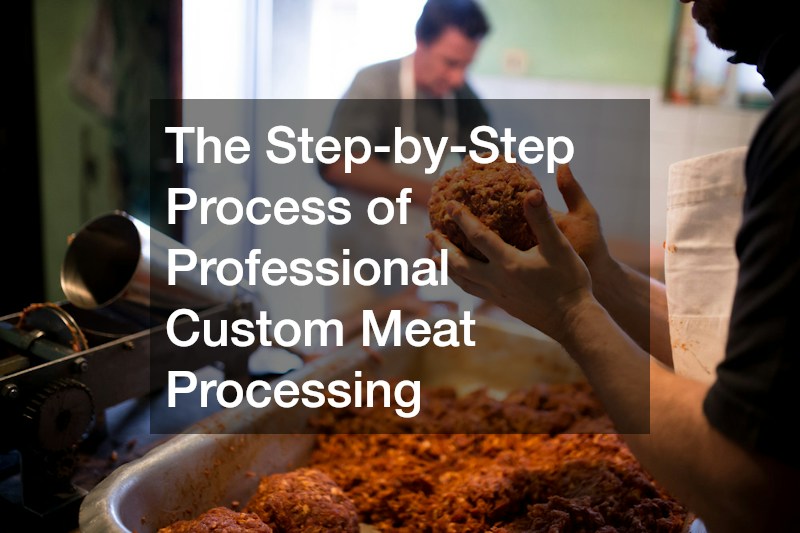
Beyond standard steaks, roasts, and ground meat, custom processing facilities often offer specialized value-added services that elevate raw cuts into artisanal products. For pork and beef orders, customers can opt for traditional curing, smoking, and custom seasoning blends. Primal cuts like pork bellies and hams are brine-soaked or dry-cured before being hung in commercial smokehouses fueled by natural hardwoods like hickory, applewood, or mesquite to develop deep, complex flavors and characteristic golden finishes. Master processors continuously monitor smoke density and chamber temperatures to guarantee consistent flavor penetration.
In addition to bacon and hams, specialized sausage production is a cornerstone of advanced custom processing. Trimmings are ground to precise lean-to-fat ratios and blended with proprietary spice mixes to create everything from mild breakfast links and Italian sausages to dried snack sticks and aged summer sausages.
Utilizing these specialty options through a professional butcher service allows livestock owners to diversify their freezer inventory with ready-to-eat, deli-style products tailored precisely to their family’s palate.
Receiving, Inspection, and Initial Handling
The professional custom meat processing cycle begins the moment livestock arrives at the processing facility. Whether a local farmer brings in beef, pork, lamb, or wild game, establishing clear identification and traceability is paramount. Each animal receives a unique tracking number linked directly to the owner’s custom cut sheet. This rigorous labeling protocol ensures that every customer receives the exact meat from the specific animal they brought to the facility.
Before processing begins, trained technicians conduct a thorough inspection of the animal to verify overall health and condition. Cleanliness, proper handling, and stress reduction are prioritized during initial intake, as high stress levels can adversely affect meat quality and pH balance. Facilities often utilize low-stress handling corrals specifically designed to keep animals calm prior to processing. A professional butcher service provides a controlled, humane environment that meets strict state and federal sanitation guidelines, laying the groundwork for high-yield, premium-quality meat products.
Humane Harvest, Chilling, and Carcass Aging
Following initial inspection, the harvest process is carried out swiftly using industry-standard, humane methods. The animal is skinned, eviscerated, and split into halves or quarters depending on its size. Throughout this stage, sanitary conditions are rigorously maintained to prevent cross-contamination. Workers continuously wash and inspect the carcass before it enters the primary cooling phase.
Rapid temperature reduction is critical for food safety and meat preservation. Carcasses are moved directly into temperature-controlled walk-in coolers where circulating cold air drops the internal core temperature rapidly. For beef, this stage often includes an extended aging period ranging from 7 to 21 days. Controlled dry aging allows naturally occurring enzymes to break down tough muscle fibers, significantly enhancing tenderness and developing rich, complex flavors. An experienced butcher service carefully monitors humidity, temperature, and airflow inside the aging cooler to optimize meat quality while minimizing moisture loss.
Breaking Down Primals into Custom Cuts
Once proper aging is complete, the carcass moves to the main fabrication floor, where skilled meat cutters begin the breakdown process. Using specialized bandsaws, boning knives, and handsaws, butchers first break the quarters down into primal cuts—such as the chuck, rib, loin, and round on a beef carcass. From these primal sections, the cutter follows the customer’s individual cut sheet to craft sub-primals and retail-ready portions. Skilled cutters take great care to maximize yield while removing excess surface fat and bone fragments.
This customized breakdown allows livestock owners to dictate exact specifications for their order. Customers can choose T-bone steaks versus strip steaks and tenderloins, specify bone-in or boneless cuts, request specific steak thicknesses, and determine roast sizes. Remaining trim is routed to high-capacity grinders to produce lean ground meat or processed into specialty products like bratwurst, summer sausage, and breakfast links. Precise fat-to-lean ratios are carefully maintained during grinding to ensure optimal flavor and juiciness. Utilizing a tailored butcher service ensures that every part of the animal is maximized according to the owner’s cooking preferences and household needs.
Vacuum Packaging, Freezing, and Final Pickup
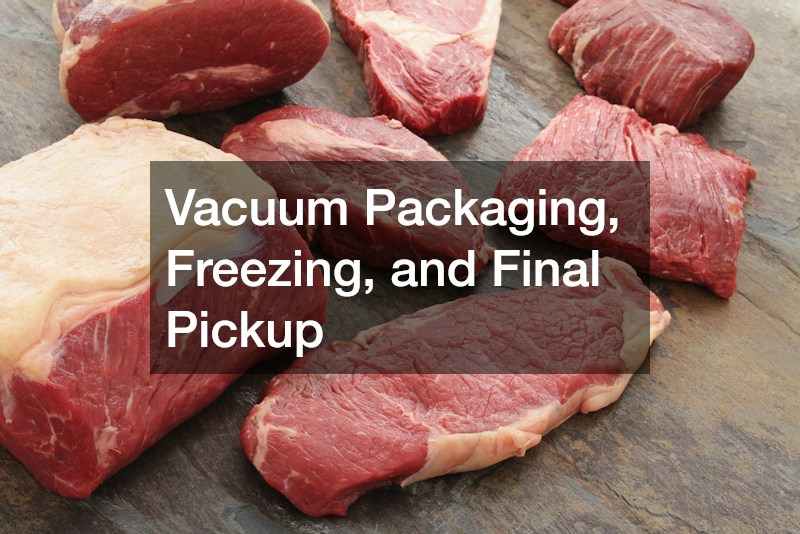
After cutting, trimming, and portioning, the meat transitions to the packaging station to protect it against freezer burn and oxidation. High-density commercial vacuum sealing is the industry standard for custom processing. Each cut is placed in thick, puncture-resistant vacuum pouches, air is completely evacuated, and the pouch is heat-sealed. Clear, legible labels are applied to every package, detailing the cut name, weight, customer name, and processing date. Commercial-grade labeling ensures easy inventory management when organizing home freezers.
Once packaged, the meat enters a commercial blast freezer set well below zero degrees Fahrenheit. Rapid freezing forms smaller ice crystals within the muscle fibers, preserving the texture, moisture, and cellular integrity of the meat when thawed later. After the entire order reaches a solid frozen state, it is boxed, inventoried, and placed in cold storage until the customer arrives for pickup. Organised pickup manifests streamline the loading process so customers can quickly transfer their frozen order to home storage. This meticulous end-to-end workflow transforms farm-raised livestock into neatly packaged, freezer-ready cuts that maintain exceptional quality and flavor for months.